
Supporting Access as Prescription Drugs Evolve
December 23, 2025As prescription drugs continue to evolve, many medications are being approved for new uses or new patient groups. These changes can bring important treatment options to more people, but they can also add complexity and cost for employers and members.
At Univera Healthcare, we take a steady, thoughtful approach by focusing on access to needed medications while managing costs responsibly, so coverage remains sustainable over time. Through clinical review, careful monitoring, and utilization management, we work to help plans adapt to change without losing sight of the people behind the coverage.
What Are Expanded Indications?
An expanded indication means a medication approved for one condition is later approved to treat additional conditions, age groups, or stages of disease. These approvals can open the door to important treatment options—but they can also increase how often a drug is used, which may drive up overall costs.
Univera Healthcare closely monitors these changes to help ensure medications are used appropriately and aligned with current clinical evidence.
How Univera Healthcare Helps Manage Pharmacy Costs
Managing pharmacy trends is an ongoing process at Univera Healthcare. It starts well before a drug reaches the market and continues as new uses and formulations emerge.

Our approach includes:
- Monitoring drugs in development and upcoming FDA approvals
- Reviewing clinical evidence and treatment guidelines
- Making formulary decisions that balance value and access
- Using prior authorization to support safe and appropriate use
- Tracking utilization and costs across all lines of business
This steady, proactive approach helps minimize surprises and supports more predictable plan costs.
How Expanded Indication are Showing up Across Care
Inflammatory Conditions: Managing Growth With Care
Inflammatory conditions, such as rheumatoid arthritis, psoriasis, asthma, and inflammatory bowel disease are often treated with specialty medications. Many of these drugs continue to gain expanded FDA-approved uses.
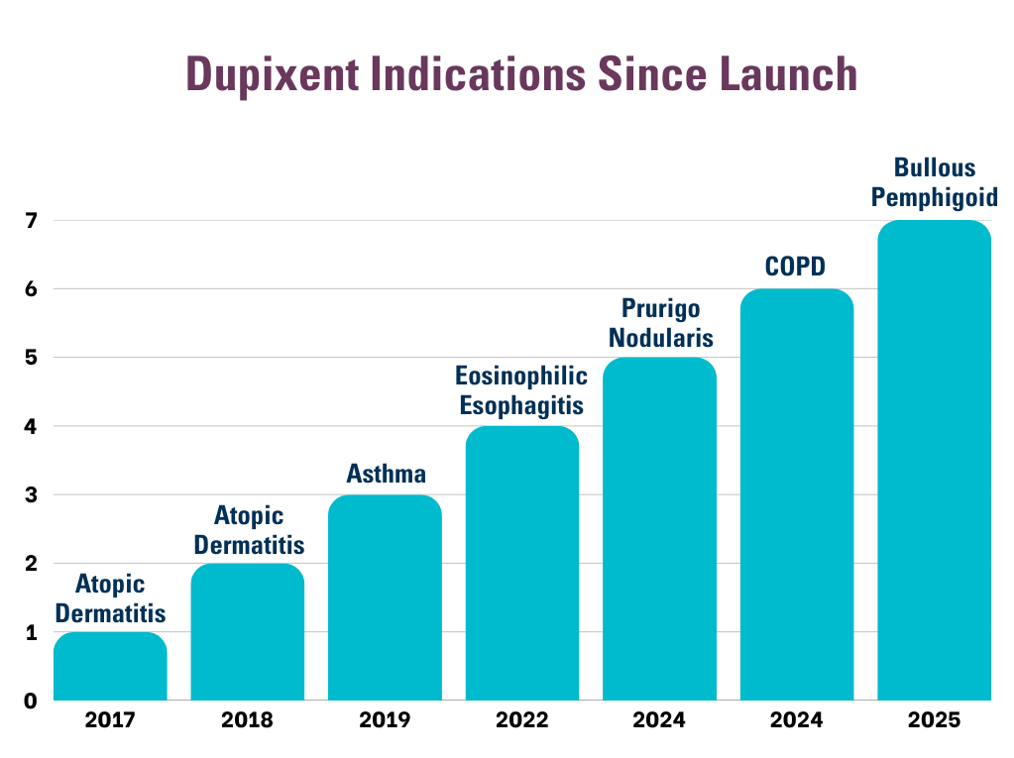
As more members become eligible for treatment, utilization can increase. Univera Healthcare’s utilization management helps ensure these therapies are prescribed based on evidence and clinical need.
For medications like Dupixent®, Univera Healthcare regularly reviews approval trends, clinical guidance, and real-world use. Coverage criteria may be adjusted over time to reflect new evidence while maintaining responsible cost management. Without our utilization management measures, expanded indications for Dupixent® could have added an estimated $7.7M in costs, but our strategies delivered $23.6M in savings in 2024 alone.*

This approach helps support access for members while managing the financial impact for employers and health plans.
GLP-1 Medications: Supporting Appropriate Use
GLP-1 medications play an important role in managing diabetes and, in some cases, weight-related conditions. Demand for these medications has grown as shortages have eased and new uses are explored.
Key drivers of increased utilization include:
- More new starts and continued therapy
- Expanded indications under review or in development
- A growing pipeline of new treatments
Univera Healthcare applies utilization management strategies that align with clinical guidelines and evidence-based care. These may include prior authorization, formulary placement, and safeguards to prevent duplicate or overlapping therapy.
These measures are designed to help ensure GLP-1 medications are available for members who need them—while supporting affordability for employer-sponsored plans.
Oncology: Expanded Uses and New Formulations
Cancer treatments often begin with limited approved uses and expand over time. One example is Keytruda®, which was first approved in 2014 for advanced non-operable melanoma and is now used to treat many different types of cancer.
In addition to expanded indications, some oncology drugs are now available in new formulations. Certain therapies that were once given only through intravenous (IV) infusion are becoming available as subcutaneous (SC) injections.
For example, Keytruda’s SC formulation must still be administered by a health care professional, but it can be given more quickly than IV therapy. This may offer operational benefits for health systems while maintaining clinical effectiveness.
Another example is Itvisma®, a newly approved formulation for spinal muscular atrophy that expands treatment access to patients age 2 and older.
While regulatory requirements limit some cost-management options in oncology, Univera Healthcare remains committed to responsible stewardship and member access.
Here to Support You—Now and Ahead
Expanded drug uses and new formulations reflect meaningful progress in care. At the same time, they can create understandable concerns about affordability and long-term plan impact.
Univera Healthcare is here to support employers through these changes. By closely monitoring how prescription drugs are used and applying thoughtful utilization management, we help balance access, quality, and cost. Our goal is to provide clarity, consistency, and confidence so Western New York can move forward knowing they have a trusted partner by their side.
Disclaimer
*2024 Health Plan Data